Removing Nipple Shields: A Gentle, Step-by-Step Guide
Many mums come to me looking for support to remove nipple shields. While they can be incredibly helpful in the early days and weeks for a variety of reasons, there often comes a point where you’d like to transition away from them.
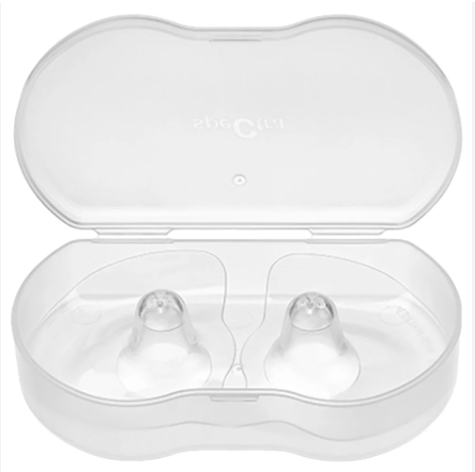
The most important thing to know is: this is rarely an instant change. It’s usually a gradual, step-by-step process—and that’s completely normal.
Here are my top 10 tips to support you and your baby through this transition:
1. Take this step by step
Removing nipple shields is a process. Some feeds may be with a shield, some without, and many will be a mixture of both for a while. When you are both relaxed is the time to try new things (so maybe not the middle of the night!)
2. Skin to skin is your super power!
Spending lots of time in skin-to-skin contact helps your baby tap into their natural feeding instincts and can make latching easier and more intuitive. This can also include baby wearing in a sling, or co bathing.
3. Watch your baby, not the clock!
Learn your baby’s early feeding cues (stirring, rooting, hand-to-mouth, etc).
Offering the breast before they are hungry can make attempts without the shield much more successful.
4. Start without the shield
At the beginning of a feed, try latching without the shield.
If your baby becomes unsettled, it’s absolutely ok to use it—this isn’t all or nothing.
5. Try removing the shield mid-feed
Once your milk has let down (or after a few minutes) and your baby is feeding calmly, gently remove the shield and attempt to relatch. This often works well because your baby is more relaxed and milk is already flowing.
6. Use breast shaping techniques
Shaping the breast or using techniques like the “flipple” can help your baby achieve a deeper, more effective latch, meaning you won’t need to reach for a shield.
7. Experiment with positioning
Laid-back or reclined positions can be particularly helpful. Gravity supports your baby to come in close, often improving latch depth and comfort. Consider starting in one position and seeing how you can lean back slightly.
8. Prepare your breast
If your breasts feel very full, expressing a small amount first can soften them and make latching easier.
You can also encourage the nipple to protrude before offering the breast, by rubbing or stroking it.
9. Revisit attachment basics
A wide open mouth and deep latch are key for comfort. Sometimes a small adjustment here makes a big difference in moving away from shields.
10. Be patient with yourself
This is a learning process for both you and your baby, and takes time! Creating a calm, relaxed environment can really help—take a breath, get comfortable, and give yourself time. Consider what may encourage you to actively rest?

Looking at the bigger picture..
It’s really important to understand why the nipple shield was needed in the first place.
In some cases, there may be an underlying cause such as:
- Feeding mechanics or positioning challenges
- Breast fullness or nipple shape
- Oral function difficulties (including tongue restriction)
Working with a qualified practitioner; such as an IBCLC or tongue tie practitioner, can help identify and address these factors.
Additional support that can help..
- Tongue exercises or stretches can support improved function
- Using these as a “warm-up” before feeds can sometimes make latching easier
- Gentle bodywork (such as with an osteopath) may help release any tension affecting feeding
And remember…
You are not doing anything wrong if your baby still needs the shield sometimes.
Progress isn’t always linear—but with the right support, most babies can transition away when they are ready. Realistically, I find this approach can take 2-3 weeks depending on baby’s age.
If you’d like personalised support, I’m always here to help guide you through it. Get in touch!